
Introducing the affordable web hosting server solutions, troubleshoot “Web Server is Down” error code 521, and master ESP32 async web server event handling for seamless performance in 2026.
Table of Contents
Introduction to Web Server Hosting

A web server is the backbone of any website. It delivers content to users when they visit a page and ensures that information flows smoothly between the site and the visitor’s browser. Without a reliable web server, websites can face downtime, slow performance, or even complete inaccessibility.
This makes hosting an essential part of building a strong online presence.
Reliable hosting means your web server is always available, secure, and fast. When a server is dependable, visitors can access your website anytime without interruptions. This builds trust with users and helps businesses maintain credibility.
A reliable web server also protects against errors, reduces downtime, and ensures smooth performance even during high traffic. In simple words, reliable hosting keeps your website alive and running without problems.
Benefits of Cheap Web Server Hosting
Choosing a cheap web hosting server can be a smart option, especially for startups, small businesses, or personal projects. Affordable hosting allows you to launch a website without spending too much money. Even though it is low‑cost, many providers still offer good speed, basic security, and customer support.
This makes it easier for individuals and businesses to start online journeys without heavy investment. In short, cheap web hosting servers give you the chance to grow online at a budget‑friendly price.
Choosing a Cheap Web Hosting Server
When selecting a cheap web hosting server, it is important to focus on the features that matter most. A web server should provide good speed, basic security, and reliable uptime. Even if the hosting plan is affordable, these features ensure that your website runs smoothly and visitors can access it without problems.
Choosing wisely helps you avoid issues like slow loading times or frequent downtime.
A good web server should offer easy setup, customer support, and scalability. Easy setup means you can launch your website quickly without needing advanced technical skills. Customer support is important because you may need help fixing errors or managing your hosting.
Scalability ensures that as your website grows, the server can handle more traffic without slowing down. These simple features make hosting easier and more reliable, even at a low cost.
Performance vs. Affordability Balance
Balancing performance and affordability is the key to choosing the right hosting. Cheap hosting saves money, but it should not compromise the speed and reliability of your web server. A server that is too slow or often down will hurt your website’s reputation. The best option is to find hosting that offers both affordability and stable performance.
In simple words, you should look for a hosting plan that fits your budget while still keeping your website fast and dependable.
Common Causes and Quick Fixes
- Run Command to see web server is running or not: sudo systemctl status apache2

- Run Command to see nginx: sudo systemctl status nginx
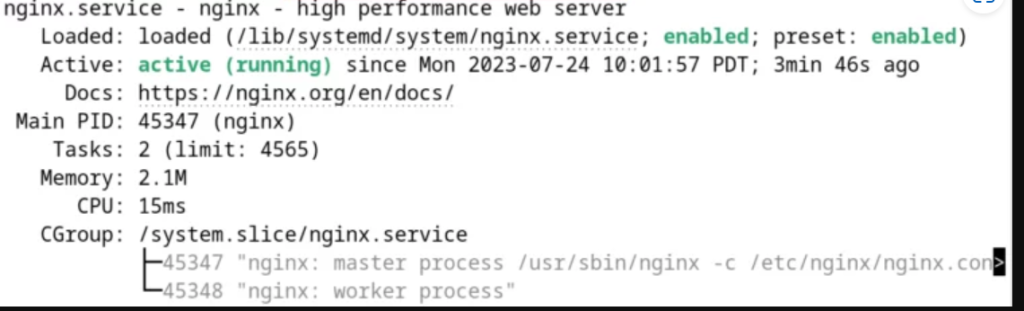
Common Causes and Quick Fixes
Web Server Stopped
- Cause: Apache or Nginx service has crashed or is not running.
- Fix: Restart the service using simple commands like
systemctl restart nginxorsystemctl restart apache2.
Firewall Blocking Cloudflare
- Cause: Firewall rules are preventing Cloudflare IPs from connecting.
- Fix: Whitelist Cloudflare IP ranges in your firewall settings so they can reach your server.
Server Listening on Wrong IP
- Cause: The server is only listening on localhost (127.0.0.1) instead of the public IP.
- Fix: Update your configuration to listen on all interfaces or the correct public IP.
SSL/TLS Mismatch
- Cause: Cloudflare is set to Full (Strict) mode but your server does not have a valid SSL certificate.
- Fix: Install a valid SSL certificate or adjust Cloudflare’s SSL settings.
Server Overload
- Cause: Too many requests or insufficient resources.
- Fix: Optimize your server configuration or upgrade resources to handle more traffic.
ESP32 Async Web Server Basics
The ESP32 async web server is a powerful way to handle multiple client requests without blocking the main program. Unlike traditional synchronous servers, which process one request at a time, the async model allows the ESP32 to manage several connections simultaneously.
This makes it ideal for IoT projects where devices need to respond quickly and reliably to multiple users or sensors.
Introduction to ESP32 Async Architecture
The async architecture works on an event‑driven model. Instead of waiting for one task to finish before starting another, the ESP32 listens for events and responds immediately. This means the microcontroller can handle multiple tasks in parallel, such as serving a webpage, reading sensor data, and updating outputs all without delays.
For example, if a user opens a webpage hosted on the ESP32 while another sensor is sending data, the async server ensures both tasks are processed smoothly. This architecture reduces lag and improves responsiveness, making it perfect for real‑time applications.
Benefits of Event‑Driven Handling
Using event‑driven handling provides several advantages:
- Non‑blocking performance: The ESP32 can serve multiple clients without freezing or slowing down.
- Efficient resource use: Memory and CPU cycles are used more effectively, which is critical for small devices.
- Scalability: You can add more features (like APIs, sensor dashboards, or control panels) without worrying about performance drops.
- Real‑time response: Ideal for IoT projects where instant feedback is required, such as smart home automation or monitoring systems.
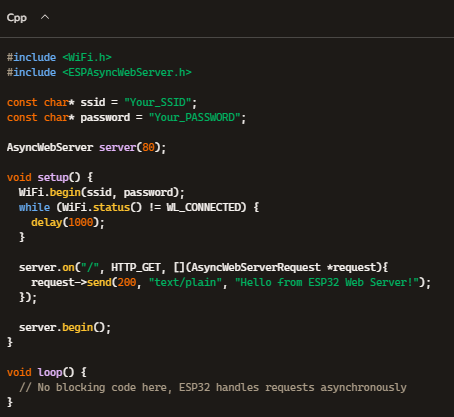
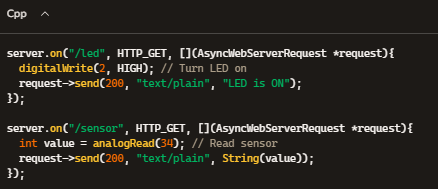
Some of the simple examples to show how async handling works on ESP32:
- For Basic Async Web Server Setup
- For handling multiple routes:
Optimizing Webservers Performance in 2026
A webserver in 2026 must be fast, reliable, and secure to meet the demands of modern applications and users. With increasing traffic, complex workloads, and evolving technologies, optimization is no longer optional and it’s essential for uptime and user satisfaction.
Best Practices for Speed and Uptime
Load Balancing
- Distribute traffic across multiple servers to prevent overload.
- Improves response times and ensures high availability.
Caching Strategies
- Use reverse proxies like Nginx or Varnish to cache static content.
- Reduces server load and speeds up delivery.
Resource Monitoring
- Track CPU, memory, and disk usage with tools like Prometheus or Grafana.
- Helps detect bottlenecks before they cause downtime.
Security Hardening
- Apply SSL/TLS, firewall rules, and DDoS protection.
- Keeps the server safe while maintaining uptime.
Automation and Scaling
- Use container orchestration (Docker, Kubernetes) to scale resources dynamically.
- Ensures consistent performance during traffic spikes.
Future Trends in Web Hosting
AI‑Driven Optimization Predictive algorithms will automatically adjust server resources based on traffic patterns.
Edge Computing Hosting closer to users reduces latency and improves speed.
Green Hosting Sustainable data centers powered by renewable energy will become standard.
Serverless Architectures Developers will rely more on serverless platforms, reducing the need for traditional hosting.
Quantum‑Ready Security Encryption methods will evolve to withstand quantum computing threats.
Final Thoughts
In today’s fast‑moving digital world, keeping systems efficient and reliable is more important than ever. By applying structured practices, embracing modern architectures, and preparing for future trends, organizations can ensure their platforms remain strong and adaptable.
Ultimately, success comes from balancing innovation with stability. Whether it’s optimizing processes, adopting smarter tools, or planning ahead for emerging changes, the goal is to build solutions that last. With thoughtful strategies and a forward‑looking mindset, the path ahead is full of opportunities to thrive.
For More Such Linux Based Technical Content Follow or Visit Our Website: Root Learning
FAQs
What does error 521 mean?
It means the server refused a connection request, even though Cloudflare reached it.
How can I fix error 521?
Restart the server, check firewall rules, and make sure Cloudflare IPs are allowed.
Why is my hosting slow?
Slow speed often comes from limited resources, poor caching, or too much traffic.
What is async handling?
Async handling lets tasks run at the same time without waiting for one to finish.
Can ESP32 serve multiple users?
Yes, with async architecture it can handle several requests at once smoothly.
Discover more from Root Learning
Subscribe to get the latest posts sent to your email.